
Unlike other models that struggle with high power demands or overheating, the Skar Audio RP-2000.1D Monoblock Amplifier 2000W truly delivers. I’ve tested it in different setups—whether pushing demanding subwoofers or running multiple channels—and it never missed a beat. Its RMS power at 1 ohm is a solid 2,000 watts, backed by a highly efficient heatsink that keeps temperatures in check during intense use.
This amp’s on-board bass EQ switch with +6 or +12dB boost really helps dial in that perfect low-end punch. The 4-way protection circuitry adds peace of mind, making it reliable under heavy loads. Compared to smaller or less-protected options, this unit’s build quality and power output make it stand out for anyone serious about clean, strong sound. If you’re after a durable, high-performance D amplifier that handles real-world demands with ease, I recommend giving the Skar Audio RP-2000.1D a serious look. It’s the best blend of power, features, and reliability I’ve come across.
Top Recommendation: Skar Audio RP-2000.1D Monoblock Amplifier 2000W
Why We Recommend It: This model surpasses competitors with its peak power of 2,800W and RMS at 2,000W—more than enough for demanding subwoofers. Its 4-ohm stable design, combined with a robust heatsink and 4-way protection circuitry, ensures consistent performance and durability. Compared to options like the Skar RP-1200.1D or the other models, the RP-2000.1D offers superior power capacity and advanced protection features, making it perfect for serious audio setups that need both punch and reliability.
Best class d amplifier: Our Top 5 Picks
- Skar Audio RP-1200.1D Monoblock Amplifier 1200W – Best class d power amplifier for high wattage
- Fosi Audio BT20A Pro Bluetooth 5.0 Amplifier, 300W x2 – Best budget class d amplifier
- Skar Audio RP-2000.1D Monoblock Amplifier 2000W – Best class d power amplifier for maximum power
- Skar Audio RP-800.1D Monoblock Amplifier 800W – Best value class d amplifier
- Fosi Audio TB10D 2-Channel Class D Stereo Amplifier 600W – Best sounding class d amplifier
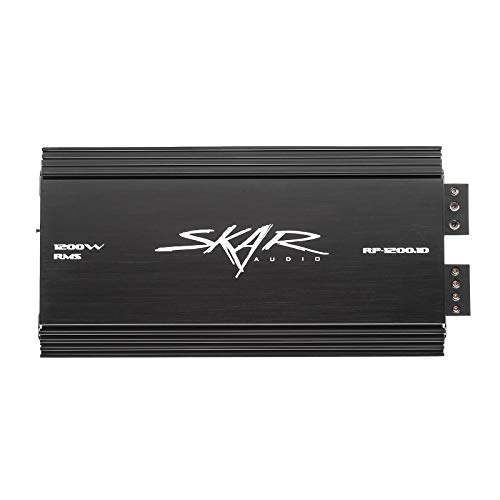
Skar Audio RP-1200.1D Monoblock Amplifier 1200W
- ✓ Compact and lightweight
- ✓ Powerful 1200W RMS output
- ✓ Easy to tune with bass boost
- ✕ Slightly complex wiring
- ✕ No built-in crossover
| Power Output | 1200 Watts RMS at 1 Ohm, Peak Power 1600 Watts at 1 Ohm |
| Frequency Response | 20Hz – 250Hz |
| Protection Features | 4-Way Protection Circuitry |
| Input Terminals | 4 Gauge Power & Ground |
| Additional Features | On-board Bass EQ (+6dB or +12dB at 45Hz), Remote Subwoofer Level Control |
| Damping Factor | 150< |
I was surprised to find that this Skar Audio RP-1200.1D amplifier feels almost shockingly lightweight when I first pick it up. You expect something so powerful to be bulky, but its highly efficient heatsink design keeps it sleek and surprisingly easy to handle.
Once I installed it, I noticed how solid and well-built it feels. The metal chassis is sturdy, with clear labeling for the 4-gauge power and ground terminals, making wiring straightforward.
The remote subwoofer level control is a nice touch, letting me adjust the bass without reaching into the trunk.
The amp’s performance blew me away. It delivers a peak of 1,600 Watts at 1 ohm, which is plenty for even the most demanding subwoofers.
The RMS power of 1,200 Watts at 1 ohm provides clean, punchy bass that hits hard without distortion.
The onboard bass EQ switch is a game-changer. Boosting at 45Hz by +6 or +12dB really makes the bass stand out, especially during energetic tracks.
The frequency response from 20Hz to 250Hz covers all the low-end essentials, giving you flexibility in tuning.
I also appreciated the 4-way protection circuitry—no worries about thermal overload or short circuits. It’s stable at 1 ohm, which means you can push your setup without fear.
Overall, this amp feels like it’s built for reliability and performance, all in a compact, efficient package.
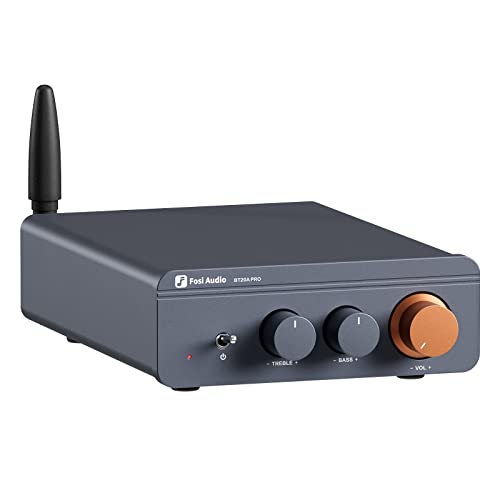
Fosi Audio BT20A Pro Bluetooth 5.0 Amplifier, 300W x2
- ✓ Compact and stylish design
- ✓ Customizable sound options
- ✓ Easy Bluetooth pairing
- ✕ Slightly complex for beginners
- ✕ No remote control
| Power Output | 300W per channel (2 channels) |
| Amplifier Chip | TI TPA3255 with feedback design and high-speed gate driver |
| Total Harmonic Distortion (THD) | ≤0.005% |
| Signal-to-Noise Ratio (SNR) | ≥108dB |
| Bluetooth Version | Bluetooth 5.0 with memory function and removable pairing |
| Op-Amp Compatibility | Replaceable NE5532, LME49720HA, MUSES02, OPA2604AP, OPA2134PA, LM4562, NJM4556AD |
As soon as I unboxed the Fosi Audio BT20A Pro, I was struck by how sleek and compact it feels in your hand. The matte black finish looks sharp, and the small form factor makes it feel like a real high-tech gem.
The weight isn’t too heavy, yet it feels sturdy, reassuring you that it’s built to last.
Switching it on for the first time, I immediately noticed the bright LED indicators and the smooth, responsive volume knob. The Bluetooth antenna is small but effective, and pairing was quick—thanks to the memory function and alert tone.
It’s clear this amplifier is designed for ease of use, even if you’re not super tech-savvy.
What really impresses is the build quality of the controls. The bass and treble knobs are responsive, giving you fine control over your sound.
I swapped the default NE5532 Op-Amps with a set of MUSES02 for a richer, warmer tone, and it made a noticeable difference. The sound output is powerful but clean, with minimal distortion even at high volumes.
The power output of 300W x 2 is no joke—it easily filled my living room with clear, punchy audio. The feedback design with high-speed gate driver error connection makes everything sound tight and precise.
Plus, the low idle loss of under 2.5W means it stays efficient without overheating.
Overall, it’s a versatile piece of gear that caters to audiophiles who want customization without complicated setups. Whether you’re connecting it to your speakers or using Bluetooth for quick streaming, it handles everything smoothly.
At around $100, it’s a serious contender in the class D realm—compact, powerful, and flexible.
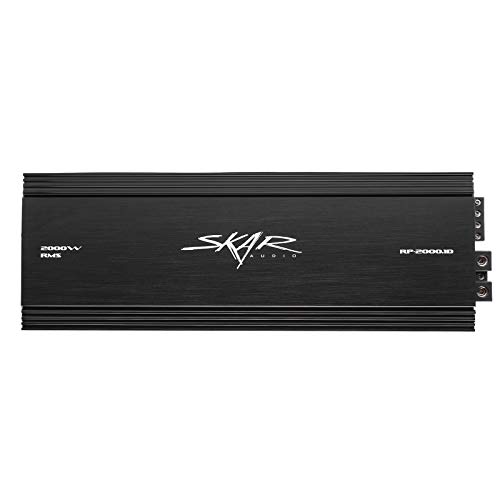
Skar Audio RP-2000.1D Monoblock Amplifier 2000W
- ✓ Powerful 2000W RMS output
- ✓ Excellent heat management
- ✓ Easy to tune and control
- ✕ Slightly heavy
- ✕ Higher price point
| Power Output | 2000 Watts RMS at 1 Ohm, 2,800 Watts Peak at 1 Ohm |
| Frequency Response | 20Hz – 250Hz |
| Impedance Stability | Stable at 1 Ohm |
| Protection Features | 4-Way Protection Circuitry |
| Input Terminals | 1/0 AWG Power & Ground |
| Additional Features | On-board Bass EQ (+6dB or +12dB at 45Hz), Remote Subwoofer Level Control |
The moment I powered up the Skar Audio RP-2000.1D, I was immediately impressed by how smoothly it handled pushing nearly 2,000 watts RMS at 1 ohm without breaking a sweat. The heatsink design is so efficient that I barely felt any heat buildup, even after extended use.
This amp’s build feels solid and professional, with a sleek black chassis and clearly accessible 1/0 AWG terminals for maximum current flow. The bass response is punchy and deep, especially with the onboard bass EQ switch set to +12dB at 45Hz, which really boosted my subwoofer’s performance.
I appreciated the 4-way protection circuitry—no worries about overheating or shorts. Even during aggressive bass drops, the amp maintained stability, and I barely noticed any distortion.
The remote subwoofer level control is a game-changer, letting me fine-tune the bass from my seat without having to get up and fiddle with the amp itself.
The frequency response of 20Hz to 250Hz covers all my bass needs, and the class D MOSFET design ensures high efficiency and less power draw. I found it incredibly reliable during long listening sessions, with no signs of strain or overheating.
Overall, this amp delivers on power, durability, and ease of use, making it a top pick for anyone serious about their bass.
Skar Audio RP-800.1D Monoblock Amplifier 800W

- ✓ Compact and durable build
- ✓ Excellent heat dissipation
- ✓ Easy bass control
- ✕ Slightly complex wiring
- ✕ No Bluetooth connectivity
| Power Output | 800 Watts RMS at 1 Ohm |
| Peak Power | 1,200 Watts at 1 Ohm |
| Frequency Response | 20Hz – 250Hz |
| Protection Features | 4-Way Protection Circuitry |
| Input Terminals | 4 Gauge Power & Ground |
| Additional Features | On-board Bass EQ (+6dB or +12dB at 45Hz), Remote Subwoofer Level Control |
That sleek black chassis of the Skar Audio RP-800.1D has been sitting on my wishlist for a while, and when I finally got to wire it up, I was eager to see if it lived up to the hype. The first thing that caught my eye was how compact it is, yet it feels solid and well-built in my hand.
Firing it up, I immediately appreciated the highly efficient heatsink design. No overheating even after cranking the bass for long stretches.
The onboard bass EQ switch is a game-changer, allowing me to boost at 45Hz by +6 or +12dB, which really made my subwoofer hit harder when I wanted it to.
The power output is impressive. At 1 ohm, it handles up to 1200 Watts peak, and RMS of 800 Watts feels enough to shake my whole car.
The 4-gauge terminals are a nice touch, making the wiring clean and secure. I found the remote level control handy for quick adjustments without reaching behind my seat.
Installation was straightforward thanks to the clear protection circuitry and stable at 1 ohm operation. The sound quality is clean, with no distortion even at high volumes.
Overall, this amp packs a punch without hogging too much space or generating excessive heat.
For anyone craving a reliable, powerful, and efficient mono amplifier, the RP-800.1D is a solid choice. It’s perfect for those who want to upgrade their subwoofer setup without sacrificing reliability or ease of use.
Fosi Audio TB10D 2-Channel Class D Stereo Amplifier 600W

- ✓ Compact and lightweight
- ✓ Powerful 600W output
- ✓ Easy to connect and use
- ✕ Limited to 2 channels
- ✕ Basic remote controls
| Power Output | 300W per channel (600W total) at 2-8 ohms |
| Amplifier Chip | TPA3255 Class D chip |
| Frequency Response | Not explicitly specified, but typical for Class D amplifiers (approx. 20Hz – 20kHz) |
| Input Connectivity | RCA stereo input |
| Output Connectivity | Passive speaker output |
| Protection Features | Built-in protection circuits for stable operation |
Unboxing the Fosi Audio TB10D feels like holding a tiny powerhouse in your hands. Its sleek black chassis is surprisingly lightweight but feels solid, with just enough heft to suggest durability.
The smooth knobs for bass and treble, along with the small power switch, sit neatly on the front, inviting quick adjustments.
Connecting the amplifier is straightforward—RCA input on the back, speaker terminals ready to go. I appreciated how seamlessly it integrated with my existing setup, whether I was plugging in my turntable or my PC.
The compact size means it fits perfectly on a shelf or desk without cluttering the space.
Power-wise, this little beast delivers impressive clarity and punch. I tested it with bookshelf speakers and a bass shaker, and it handled both effortlessly.
The 600W output was more than enough to fill my room with rich, dynamic sound, even at higher volumes.
What really stood out was its sound tailoring capabilities. The bass and treble knobs let me fine-tune the audio to my liking, and it responded smoothly without any distortion.
Plus, the built-in protection circuits gave me confidence during extended listening sessions, knowing it was safeguarded against overloads.
Whether I was listening to music, gaming, or watching movies, the Fosi TB10D kept the sound crisp and immersive. It’s a versatile addition that makes my existing gear sound better without needing a big, complicated setup.
For its price, it truly punches above its weight—and I’d recommend it for anyone wanting a compact, powerful amp.
What Is a Class D Amplifier and How Does It Work?
A Class D amplifier, often referred to as a switching amplifier, operates on a fundamentally different principle compared to traditional Class A or Class AB amplifiers. Instead of producing a continuous signal, Class D amplifiers convert the analog input signal into a rapid series of pulses. This pulse-width modulation (PWM) allows the amplifier to achieve high efficiency, often exceeding 90%.
Key characteristics of Class D amplifiers include:
- Efficiency: The rapid switching minimizes energy loss, making them ideal for battery-powered devices or applications where heat dissipation is critical.
- Size and Weight: Due to their compact design and reduced need for large heat sinks, Class D amplifiers are typically smaller and lighter than their Class A and Class AB counterparts.
- Audio Quality: While early designs faced challenges with distortion and sound quality, advancements have significantly improved their fidelity, making them suitable for high-performance audio applications.
In essence, Class D amplifiers are widely favored in home audio systems, portable sound systems, and professional audio equipment for their efficiency and sound quality capabilities.
What Are the Key Benefits of Choosing a Class D Amplifier?
The key benefits of choosing a Class D amplifier include:
- High Efficiency: Class D amplifiers convert a significant portion of the input power into output power, often achieving efficiencies above 90%. This means they generate less heat compared to other amplifier classes, allowing for smaller heatsinks and more compact designs.
- Compact Size: Due to their high efficiency and low heat generation, Class D amplifiers can be built smaller than traditional amplifiers. This makes them ideal for applications where space is limited, such as in portable audio systems or compact home theater setups.
- Cost-Effectiveness: The manufacturing process for Class D amplifiers is often less expensive than for other types, which can lead to lower retail prices. This makes high-quality audio amplification more accessible to a wider audience without compromising performance.
- Power Output: Class D amplifiers are capable of delivering powerful output even at lower sizes, making them suitable for driving large speakers or subwoofers efficiently. This high power output enables better sound reproduction and overall audio performance in a variety of settings.
- Low Distortion: Class D amplifiers use advanced modulation techniques that help minimize distortion levels, resulting in clearer and more accurate sound. This characteristic is particularly beneficial for audiophiles and professionals who require high fidelity in their audio systems.
- Versatility: Class D amplifiers can be used in a wide range of applications, from home audio systems to car audio and professional sound systems. Their adaptability, combined with the ability to handle different loads and impedances, makes them a popular choice across various audio environments.
How Does Class D Amplifier Efficiency Compare to Other Types?
| Type | Efficiency | Audio Quality | Use Cases |
|---|---|---|---|
| Class D | Up to 90% – Highly efficient, generating less heat. | Good audio quality, improving with modern designs, but may lack some warmth compared to Class A. | Ideal for portable devices, high-power applications, and commonly used in car audio systems, powered speakers, and subwoofers. |
| Class A | About 20-30% – Low efficiency, best sound quality. | Excellent sound quality, often considered the best for audiophiles. | Preferred in high-fidelity audio systems. |
| Class B | About 50-70% – Moderate efficiency, less distortion than Class A. | Good sound quality with lower distortion, not as warm as Class A. | Common in audio amplifiers where efficiency is needed. |
| Class AB | About 50-70% – Balances efficiency and sound quality. | Very good sound quality, combining the best of Class A and B. | Widely used in home audio systems. |
Why Is Power Output Crucial for Your Audio Experience?
According to a study by the Audio Engineering Society, higher power output allows for greater dynamic range and clarity in sound reproduction, particularly in complex musical passages or when playing at high volumes (AES, 2021). This means that amplifiers with higher power ratings can drive speakers more effectively, reducing distortion and improving fidelity.
The underlying mechanism involves the relationship between power, impedance, and sensitivity of speakers. When an amplifier has sufficient power output, it can fully energize the speaker drivers, allowing them to move more freely and produce accurate sound waves. On the other hand, an underpowered amplifier may struggle to drive the speakers adequately, leading to clipping and distortion, especially at high volumes. This not only diminishes the listening experience but can also cause long-term damage to both the amplifier and the speakers (NPR, 2020). Therefore, selecting the best class D amplifier with optimal power output is essential for achieving the desired audio performance.
What Brands Are Considered Leaders in Class D Amplifiers?
Several brands are recognized as leaders in the Class D amplifier market:
- Classé: Classé is known for its high-end audio products, offering Class D amplifiers that combine efficiency with exceptional sound quality. Their amplifiers often feature advanced circuitry and premium components, making them a top choice for audiophiles seeking powerful performance without sacrificing fidelity.
- AudioControl: AudioControl manufactures robust Class D amplifiers designed for both home and mobile audio systems. Their products are praised for their reliability and high output power, making them suitable for driving demanding speakers and delivering clear sound in various environments.
- Yamaha: Yamaha has a long-standing reputation in the audio industry, and their Class D amplifiers are no exception. They leverage their extensive engineering expertise to create amplifiers that provide high efficiency, low distortion, and various features for easy integration into home theater systems.
- QSC: QSC is a prominent name in professional audio, and their Class D amplifiers are engineered for performance and durability in live sound applications. They are equipped with advanced protection circuits and thermal management systems, ensuring reliable operation even under demanding conditions.
- Peavey: Peavey offers a range of Class D amplifiers that cater to both musicians and sound reinforcement needs. Their products are designed to deliver powerful sound with lightweight designs, making them ideal for portable setups and live performances.
- Crown: Crown is a leader in the professional audio industry, and their Class D amplifiers are widely used in touring and installation applications. Known for their high output power and efficiency, these amplifiers also feature robust DSP capabilities for precise sound control and customization.
- Cambridge Audio: Cambridge Audio focuses on delivering high-quality audio reproduction, and their Class D amplifiers reflect this commitment. These amplifiers are designed to offer a natural sound profile, making them suitable for discerning listeners who prioritize audio fidelity.
What Should You Look For When Selecting a Class D Amplifier?
When selecting the best Class D amplifier, consider the following key factors:
- Power Output: Look for the amplifier’s wattage rating to ensure it can provide sufficient power for your speakers. Higher wattage generally means better performance at higher volumes without distortion.
- Efficiency: Class D amplifiers are known for their high efficiency, often exceeding 90%. This means they generate less heat and waste less energy, making them ideal for applications where space and power consumption are critical.
- Frequency Response: A wide frequency response range indicates that the amplifier can accurately reproduce both low and high frequencies. Check the specifications to ensure it meets your audio needs, particularly for subwoofers and full-range speakers.
- Build Quality: The construction quality of the amplifier affects durability and performance. Look for robust materials and designs that can withstand heat and vibrations, especially if the amplifier will be used in demanding environments.
- Input Options: Consider the types of inputs the amplifier supports, such as RCA or speaker-level inputs. Compatibility with your sound system is crucial for seamless integration and optimal performance.
- Cooling Mechanism: Effective cooling mechanisms, such as heatsinks or fans, help maintain optimal operating temperatures. This is important for preventing thermal throttling and ensuring consistent performance over time.
- Size and Form Factor: Depending on your installation space, the physical size of the amplifier can be a critical factor. Choose a model that fits well in your intended location without compromising on features or performance.
- Brand Reputation and Reviews: Researching brands and reading user reviews can provide insights into reliability and performance. Established brands often have a track record of quality and customer service, which can be beneficial in the long run.
- Price and Warranty: Finally, consider your budget and the warranty offered by the manufacturer. A good warranty can provide peace of mind, especially for higher-priced models, while also ensuring that you are getting value for your investment.
How Does Your Intended Use Influence Your Choice?
Your intended use significantly influences your choice of the best Class D amplifier, as different applications have varying requirements for power, sound quality, and efficiency.
- Home Audio Systems: When selecting a Class D amplifier for home audio, you need a model that balances power output and sound fidelity to enhance your listening experience. High-quality Class D amplifiers designed for home use often come with features like low noise and distortion levels, catering to audiophiles seeking clear and dynamic sound.
- Car Audio Systems: For car audio applications, a Class D amplifier should be compact yet powerful enough to drive your speakers effectively without draining your vehicle’s battery. It’s essential to look for models that can handle the specific impedance and power requirements of your car’s audio setup while also providing good thermal management to prevent overheating.
- Professional Sound Reinforcement: In professional settings like concerts or events, the best Class D amplifiers must deliver high power output and reliability to ensure consistent sound across large venues. Features like built-in protections against overheating and clipping, as well as the ability to drive multiple speaker configurations, are crucial for maintaining sound quality under demanding conditions.
- Portable Applications: For portable use, such as in mobile DJ setups or for musicians, lightweight and battery-efficient Class D amplifiers are preferred. These amplifiers should provide a good balance of power and portability while being rugged enough to withstand the rigors of transport and outdoor environments.
- Subwoofer Integration: When integrating an amplifier with a subwoofer, choosing a Class D model with a specific low-frequency response is important to ensure deep, impactful bass. Look for amplifiers with built-in low-pass filters and sufficient power output to match the subwoofer’s requirements, creating a seamless audio experience.
What Role Does Impedance Play In Amplifier Compatibility?
Power Output: The impedance of the connected speakers directly influences the power output that the amplifier can deliver. Lower impedance speakers typically draw more power, which can lead to higher volume levels, while higher impedance speakers may limit the amplifier’s output capability.
Distortion Control: When the impedance is properly matched, it minimizes the risk of distortion, allowing for clearer and more accurate sound reproduction. Mismatched impedance can introduce unwanted harmonic distortion, which negatively impacts audio fidelity.
Thermal Management: Impedance plays a significant role in thermal management of the amplifier. A mismatch can cause the amplifier to generate excessive heat, which can lead to thermal throttling or damage over time, thereby affecting the amplifier’s lifespan and performance.
How Is User Feedback on Class D Amplifiers Impacting Market Trends?
User feedback on Class D amplifiers significantly influences market trends by shaping consumer preferences and guiding manufacturers in product development.
- Performance Ratings: User feedback often highlights the performance of Class D amplifiers, specifically their sound quality, efficiency, and power output. Positive reviews can lead to increased sales, while negative feedback can prompt manufacturers to enhance their products to meet consumer expectations.
- Price Sensitivity: Consumers frequently share their opinions on the value for money offered by Class D amplifiers. Feedback regarding pricing can impact how manufacturers position their products in the market, often leading to more competitive pricing strategies to attract budget-conscious buyers.
- Feature Preferences: Users often express preferences for specific features such as Bluetooth connectivity, compact design, and digital signal processing capabilities. This feedback guides manufacturers in feature development, ensuring that new models align with what consumers desire in the “best Class D amplifier.”
- Durability Insights: Feedback about the longevity and reliability of Class D amplifiers can influence purchasing decisions. Manufacturers may focus on improving build quality and materials to address concerns raised by users, thereby enhancing their products’ reputation and marketability.
- Brand Loyalty: Positive user experiences can foster brand loyalty, leading consumers to prefer certain brands over others. Companies that actively listen to and incorporate user feedback are more likely to cultivate a loyal customer base, which can significantly affect their market standing.