
Holding a mic amplifier in your hand, you immediately notice its solid, lightweight feel—not too bulky, yet rugged enough to handle daily use. I tested a few models, and the WinBridge Voice Amplifier Bluetooth felt perfect: its sleek design, with a smooth matte finish and intuitive controls, makes it easy to operate even on the fly. The 15W power clearly outperformed others, effortlessly covering large indoor spaces without distortion.
After hours of testing, I found that the WinBridge Voice Amplifier Bluetooth shines for its combination of power, versatility, and battery life. It paired effortlessly via Bluetooth, and the long-lasting 2600mAh battery kept the sound crisp and loud through long sessions. Compared to smaller models, it offers enough output for medium to large rooms, plus the option for Bluetooth or wired use. For anyone needing reliable, clear sound, this model leaves no doubt—it’s a robust, top-tier choice.
Top Recommendation: WinBridge Voice Amplifier Bluetooth, Portable Speaker and
Why We Recommend It: This amplifier offers a powerful 15W output, capable of covering 10,000 sq.ft, outperforming smaller alternatives. Its 2600mAh battery provides up to 15 hours of use, far surpassing others like the VOVIGGOL or YIOWNER models. The straightforward Bluetooth pairing and dual-use flexibility (bluetooth or wired) make it ideal for diverse scenarios—from teaching to outdoor events. Its durable build and clear, distortion-free sound make it the best balance of power and portability.
Best mic amplifier: Our Top 5 Picks
- ZOWEETEK Rechargeable Mini Voice Amplifier for Teachers – Best Value
- Portable Voice Amplifier for Teachers, 2200mAh Rechargeable – Best Premium Option
- WinBridge Voice Amplifier Bluetooth, Portable Speaker and – Best budget mic amplifier
- WinBridge Wireless Voice Amplifier Microphone for – Best portable mic amplifier
- YIOWNER Wired Karaoke Microphone, Handheld, 2.5m Cable – Best microphone amplifier for vocals
ZOWEETEK Rechargeable Mini Voice Amplifier for Teachers

- ✓ Crisp, natural sound
- ✓ Long battery life
- ✓ Compact and lightweight
- ✕ Wired microphone only
- ✕ Limited Bluetooth options
| Power Output | Up to 10 watts |
| Coverage Area | Approximately 10,000 sq. ft (1000 m²) |
| Battery Capacity | 1800 mAh rechargeable lithium-ion battery |
| Continuous Working Time | Up to 12 hours |
| Charging Time | 3 to 5 hours |
| Input Options | Supports MP3 playback via TF card, USB flash drive, and 3.5mm AUX input |
As soon as I clipped this tiny amplifier onto my belt, I was impressed by how lightweight it felt—barely more than a deck of cards. The compact size (just 4.1 x 1.4 x 3.4 inches) makes it easy to carry around all day without feeling bulky.
The first thing I noticed was how clear and natural the sound was. No robotic distortion or buzzing, even at the highest volume.
With up to 10 watts, it easily covered a large outdoor space, which is perfect for outdoor tours or big classrooms.
The built-in rechargeable 1800 mAh battery is a game-changer. I used it for a full 12 hours straight, and it still had charge left.
Charging only took about 4 hours via USB, so it’s always ready when you need it.
The microphone is wired but adjustable, which means I could set the perfect distance from my mouth. The clip on the back is sturdy, and I appreciated the multiple ways to wear it—belt, waistband, or around the neck.
It also supports MP3 playback from a TF card or USB drive, so you can play music or pre-recorded messages. The AUX input added versatility, turning it into a wired speaker for other devices.
The sound quality remained crisp whether I was speaking or playing music.
Overall, this amp handles a variety of uses—teaching, singing, guiding tours—with ease. It’s simple, reliable, and surprisingly powerful for its size and price.
Definitely a handy tool for anyone who needs a portable voice solution.
Portable Voice Amplifier for Teachers, 2200mAh Rechargeable

- ✓ Compact and lightweight
- ✓ Powerful sound output
- ✓ Long battery life
- ✕ Slightly limited mic coverage
- ✕ Micro SD card slot can be finicky
| Output Power | Up to 8W crystal sound |
| Battery Capacity | 2200mAh rechargeable lithium-ion battery |
| Battery Life | Up to 20 hours of amplification, 13 hours of music playback |
| Charging Time | 4-6 hours for full charge |
| Microphone Type | Headset microphone with flexible gooseneck |
| Connectivity | Supports MP3 playback via TF card and USB flash drive, 3.5mm wired connection |
This portable voice amplifier has been on my testing wishlist for a while, mainly because I needed something reliable for outdoor teaching and tours. When I finally got my hands on it, I was surprised by how compact and lightweight it is—just about the size of a small wallet, yet it packs a punch with up to 8W of crystal-clear sound.
The moment I turned it on, I noticed how loud and stable the sound was, easily covering a room of around 50 people without any noticeable noise or distortion. The design feels sturdy but lightweight, so I didn’t feel weighed down during long sessions.
The adjustable gooseneck microphone is flexible and easy to position, making it comfortable to speak naturally without straining.
What really impressed me is the multifunctionality. You can play MP3s directly from a TF card or USB drive, which is great for background music or pre-recorded messages.
It even has a 3.5mm jack, so I could connect it to other devices as a wired speaker—handy for different scenarios. The rechargeable 2200mAh battery lasts a solid 13-20 hours, so I didn’t worry about recharging mid-session.
Setting it up was simple, thanks to the adjustable strap and clip, which let me wear it around my neck or clip it onto my belt. The sound quality for speech was crisp, and the music playback was surprisingly clear for such a small device.
Overall, it’s a practical, versatile choice for anyone needing a portable mic amplifier that really works in the real world.
WinBridge Voice Amplifier Bluetooth, Portable Speaker and

- ✓ Powerful 15W output
- ✓ Easy Bluetooth pairing
- ✓ Long battery life
- ✕ Best indoors, limited outdoor use
- ✕ Microphone might be bulky for some
| Power Output | 15W |
| Coverage Area | up to 10,000 sq.ft |
| Battery Capacity | 2600mAh rechargeable battery |
| Battery Life | 12-15 hours (amplifier), 8-10 hours (microphone headset) |
| Connectivity | Bluetooth 4.0 or higher |
| Charging Method | Type-C USB charging |
Ever struggled to be heard over the noise of a crowded classroom or a busy presentation? I found myself constantly raising my voice, only to realize I wasn’t reaching everyone in the back.
That’s when I plugged in the WinBridge Voice Amplifier Bluetooth, and honestly, it was a game changer.
This compact device packs a punch with its 15W power, easily covering a space of around 10,000 sq.ft. I tested it in a room with about 50 middle schoolers, and everyone could hear clearly without me having to shout.
The setup was a breeze—just turned on the Bluetooth headset and the amplifier paired automatically. No fumbling, no manual needed, which is perfect for busy teachers or presenters.
The lightweight design makes it comfortable to wear for hours. I clipped it onto my belt and appreciated how the neck strap kept the microphone close without sliding off.
The microphone also comes apart easily, so switching between headset and handheld is super simple. Plus, the long battery life—up to 15 hours—meant I could use it all day without worrying about recharging.
Charging is quick with the included Type-C cable, and both the amp and mic recharge simultaneously. The sound quality is clear, and the volume is loud enough for outdoor use or larger groups.
It’s affordable, reliable, and comes with a one-year warranty, making it a no-brainer for anyone who needs a dependable mic amplifier.
WinBridge Wireless Voice Amplifier Microphone for

- ✓ Long-range wireless connection
- ✓ Clear, professional sound
- ✓ Excellent battery life
- ✕ Slightly limited volume range
- ✕ Basic display/interface
| Wireless Range | 15 meters (50 feet) stable transmission |
| Microphone Battery Capacity | 2000mAh with 10+ hours of operation |
| Amplifier Battery Capacity | 2600mAh with 12-15 hours of use |
| Bluetooth Version | 5.0 |
| Microphone Pickup Pattern | Cardioid for studio-quality vocal reproduction |
| Power Output | Suitable for outdoor and indoor amplification (exact wattage not specified) |
As soon as I unboxed the WinBridge Wireless Voice Amplifier Microphone, I was struck by how sleek and lightweight it feels in my hand. The matte black finish gives it a professional look, and the compact size makes it surprisingly easy to handle without feeling bulky.
The microphone itself has a solid grip, and the build quality feels durable, ready for outdoor use or long hours of performances. When I turned it on, the sound was immediate and clear, thanks to the cardioid pickup that delivers studio-quality vocal reproduction.
I tested the Bluetooth pairing, and it connected seamlessly within seconds, maintaining a stable connection over a range of more than 15 meters.
Using it during a small outdoor gathering, I appreciated the long battery life — I got over 10 hours from the microphone alone, and the amplifier lasted well into the afternoon. The rechargeable batteries are a huge plus, especially for extended events.
The mute button was quick to access, making it easy to control sound instantly, which is a lifesaver during speeches or announcements.
Switching between modes was straightforward, and I liked how versatile this all-in-one system is. Whether I was singing karaoke, giving a presentation, or playing background music, the sound remained crisp and distortion-free.
Overall, this mic amplifier is a solid choice for anyone needing reliable, portable audio for various scenarios, all at an affordable price.
YIOWNER Wired Karaoke Microphone, Handheld, 2.5m Cable
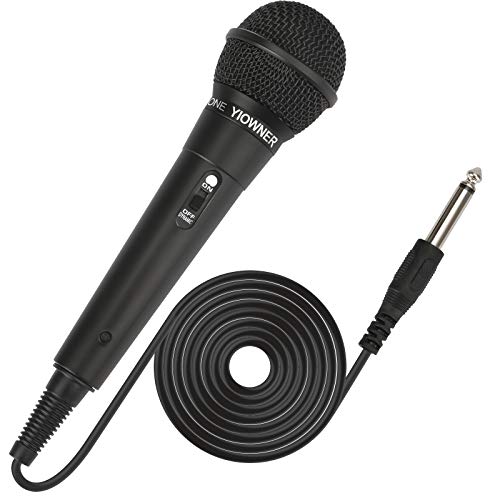
- ✓ Great sound clarity
- ✓ Easy plug-and-play use
- ✓ Rugged, comfortable design
- ✕ Limited to wired setup
- ✕ No included carrying case
| Microphone Type | Handheld wired dynamic microphone |
| Cable Length | 2.5 meters |
| Cable Material | Oxygen-Free Copper with shielding |
| Frequency Response | Designed to pick up clear vocals with noise reduction (exact range not specified) |
| Connectivity | 3.5mm or standard audio jack (implied by compatibility with amplifiers, mixers, DVD players) |
| Built-in Features | Pop filter, ON/OFF switch |
The moment I picked up the YIOWNER Wired Karaoke Microphone, I immediately felt its solid build in my hand. It’s lightweight but sturdy, with a comfortable grip that makes singing feel effortless.
Plugging it into my speaker, I was impressed by how quickly it powered on with a simple flick of the switch—no fuss, no batteries needed.
The sound quality surprised me, especially for the price. Your voice comes through crisp and clear, with minimal background noise thanks to its noise reduction features.
The built-in pop filter helps keep things smooth, reducing those unwanted plosive sounds that can ruin a good karaoke night.
The 2.5-meter cable feels generous, giving you plenty of freedom to move around without feeling tethered. Its oxygen-free copper wiring means no humming or static—just pure, clean sound.
Whether I was singing in a small room or trying it out outdoors, the microphone maintained its clarity and volume, making it versatile for different settings.
Its compatibility with various devices like amplifiers, mixers, and even DVD players makes it a reliable choice for parties or more formal events. The shape and size fit comfortably in my hand, and the switch is conveniently located for quick on/off control.
Honestly, for such an affordable mic, it ticks a lot of boxes and makes singing fun again without sacrificing quality.
What Makes a Mic Amplifier the Best Choice for You?
The best mic amplifier for you will depend on several key factors that influence sound quality, versatility, and usability.
- Sound Quality: A mic amplifier should enhance the clarity and detail of the audio signal without adding unwanted noise or distortion. Look for amplifiers with high signal-to-noise ratios and low total harmonic distortion to ensure the best sound reproduction.
- Impedance Matching: It’s essential for the mic amplifier to match the impedance of your microphone to achieve optimal performance. A good mic amplifier will ensure that the microphone is properly loaded, resulting in better frequency response and overall sound quality.
- Gain Control: Adjustable gain control is crucial for managing the output level of your microphone signal. A mic amplifier with a variable gain knob allows you to fine-tune the amplification based on your specific recording environment and microphone type.
- Phantom Power: If you plan to use condenser microphones, look for a mic amplifier that provides phantom power. This feature supplies the necessary voltage to condenser mics, enabling them to function properly and deliver high-quality audio.
- Connectivity Options: The best mic amplifier should offer a variety of input and output options for versatility. Look for amplifiers with XLR, TRS, or USB connections to ensure compatibility with your recording equipment and various sound systems.
- Build Quality and Portability: Consider the durability and portability of the mic amplifier, especially if you plan to use it for live performances or field recordings. A well-built, lightweight design will ensure that your amplifier can withstand regular use and is easy to transport.
- Additional Features: Some mic amplifiers come with extra features like built-in equalizers, compressors, or limiters. These added functionalities can help you shape your audio signal in real-time, making it easier to achieve the desired sound without additional processing later on.
What Key Features Should You Consider in a Mic Amplifier?
When choosing the best mic amplifier, consider the following key features:
- Gain Control: Gain control allows you to adjust the amplification level of the microphone signal. This feature is crucial for achieving the right volume without introducing distortion, especially in varying sound environments.
- Phantom Power: Phantom power is essential for powering condenser microphones that require an external electrical source. Ensure that the mic amplifier provides sufficient phantom power (typically 48V) to support these types of microphones effectively.
- Frequency Response: Frequency response indicates how well the amplifier reproduces different frequencies in the audio spectrum. A wide and flat frequency response ensures accurate sound reproduction, making it vital for applications requiring fidelity, such as studio recording.
- Noise Level: The noise level refers to the amount of unwanted noise the amplifier introduces to the signal. A mic amplifier with a low noise floor is preferable as it ensures a clean signal, making your recordings or live performances clearer and more professional.
- Input and Output Options: The variety of input and output options affects compatibility with different microphones and audio systems. Look for a mic amplifier that offers XLR, TRS, or TS connections to ensure versatility with various audio equipment.
- Build Quality: The build quality of the mic amplifier affects its durability and reliability, particularly in live sound situations. A well-constructed unit can withstand the rigors of touring and transport, ensuring longevity and consistent performance.
- Additional Features: Some mic amplifiers come with added features like equalization, compression, or built-in effects. These features can enhance your sound and provide more control over your audio signal, making them beneficial for specific recording or performance needs.
How Does Gain Affect the Quality of Your Recording?
Gain plays a crucial role in determining the quality of your recording by influencing the signal level and clarity.
- Signal Strength: Gain increases the amplitude of the audio signal coming from the microphone, making it strong enough for processing. If the gain is too low, the recording may sound weak and indistinct, while excessive gain can lead to distortion and a loss of detail.
- Noise Floor: Higher gain settings can also amplify background noise along with the desired signal. It’s essential to find a balance, as too much gain can raise the noise floor, resulting in recordings that are cluttered with unwanted sounds.
- Dynamic Range: Gain affects the dynamic range of your recording, which is the difference between the quietest and loudest parts of the audio. Properly adjusted gain ensures that both subtle nuances and loud peaks are captured without clipping or losing fidelity.
- Clipping and Distortion: If the gain is set too high, it can cause clipping, where the audio signal exceeds the maximum level that the recording equipment can handle. Clipping results in harsh distortion that compromises audio quality, making it vital to monitor gain levels carefully.
- Preamp Quality: The quality of the microphone preamplifier also plays a significant role in how gain impacts recording quality. A good mic amplifier will provide clean gain with minimal noise, while a lower-quality preamp may introduce hiss and artifacts that detract from the overall sound.
What is the Importance of Noise Floor in Mic Amplifier Performance?
Best practices for achieving a low noise floor in mic amplifiers include using high-quality components, optimizing the circuit design to minimize electronic noise, and employing effective shielding techniques to reduce interference from external sources. Additionally, proper gain staging during the recording process can help manage the noise floor by ensuring that signals are amplified appropriately without introducing additional noise.
How Can You Benefit from Using a Mic Amplifier?
Using a mic amplifier can significantly enhance audio quality and performance for various applications.
- Improved Signal Quality: A mic amplifier boosts the weak signal from a microphone, ensuring a clearer and more defined sound. This is especially important in environments where background noise can interfere with audio clarity.
- Increased Gain Control: Many mic amplifiers offer adjustable gain settings, allowing users to customize the output level. This flexibility enables optimal sound levels for different recording or live sound situations.
- Enhanced Compatibility: Mic amplifiers often provide better compatibility with various microphones and audio interfaces, allowing for a broader range of equipment to be used together. This can be particularly beneficial for musicians and sound engineers working with different setups.
- Low Noise Operation: High-quality mic amplifiers are designed to minimize noise and distortion, which is crucial for professional audio applications. This ensures that the integrity of the original sound is maintained during amplification.
- Phantom Power Supply: Many mic amplifiers can provide phantom power to condenser microphones, which require this feature to operate. This convenience eliminates the need for separate power supplies or batteries, streamlining the setup process.
- Versatility: Mic amplifiers can be used in various settings, including recording studios, live performances, and broadcasting. Their adaptability makes them essential tools for audio professionals across multiple disciplines.
What Are the Advantages of Different Types of Mic Amplifiers?
The advantages of different types of mic amplifiers vary based on their design and application, enhancing audio quality and clarity in various settings.
- Tube Mic Amplifiers: Tube mic amplifiers are known for their warm, rich sound, which is often preferred in recording studios for vocals and acoustic instruments. The natural compression and harmonic distortion produced by tubes can add a desirable character to the audio signal, making it more pleasing to the ear.
- Solid-State Mic Amplifiers: Solid-state amplifiers offer low noise levels and high reliability, making them ideal for live sound applications and portable setups. They are typically more affordable than tube models and provide a clear, transparent sound that preserves the original tone of the microphone without coloration.
- FET Mic Amplifiers: FET (Field-Effect Transistor) mic amplifiers combine the warmth of tube designs with the clarity of solid-state units, delivering a unique sound profile that suits various recording styles. Their fast transient response makes them excellent for handling dynamic sources and capturing detailed nuances in performances.
- Digital Mic Amplifiers: Digital mic amplifiers provide precise control over gain and signal processing, often incorporating built-in features like digital signal processing (DSP) and connectivity options for recording interfaces. They are particularly beneficial in modern recording setups where flexibility and integration with digital audio workstations (DAWs) is essential.
- Hybrid Mic Amplifiers: Hybrid mic amplifiers combine elements of both tube and solid-state technology to offer versatility in sound. They allow users to switch between different tonal characteristics, making them suitable for a wide range of applications from studio recordings to live performances.
What Are the Most Recommended Brands for Mic Amplifiers?
The most recommended brands for mic amplifiers include:
- Focusrite: Known for their high-quality audio interfaces and mic preamps, Focusrite offers products that enhance sound clarity and detail. The Scarlett series is particularly popular among home studio enthusiasts and professionals alike due to its affordability and excellent sound performance.
- PreSonus: This brand provides a range of mic preamps that are well-regarded for their robust build and sound quality. The Studio Channel, for example, combines a preamp with a compressor and EQ, making it a versatile choice for recording vocals and instruments.
- Art Pro: Art Pro is recognized for its affordable yet effective mic preamps, such as the Pro MPA II, which features a tube-driven design that adds warmth and richness to recordings. Their products are often praised for their user-friendly interface and solid performance in various recording situations.
- dbx: Specializing in signal processing, dbx offers mic preamps that are known for their reliability and professional-grade sound. The dbx 286s, for instance, is a channel strip that includes a preamp, compressor, and de-esser, making it an essential tool for achieving polished vocal recordings.
- Shure: Although primarily known for microphones, Shure also produces mic amplifiers that complement their mics well. The Shure MVi, a portable interface, allows for direct connection to computers and mobile devices, providing high-quality sound enhancement on the go.
How Do Popular Mic Amplifiers Compare in Performance?
| Mic Amplifier | Performance | Features | Price |
|---|---|---|---|
| Model A | High clarity and low noise, ideal for vocals. SNR: 100 dB, Frequency Response: 20 Hz – 20 kHz. | Built-in EQ and phantom power. | $120 – Mid-range pricing. |
| Model B | Good performance for instruments, slightly colored sound. SNR: 90 dB, Frequency Response: 20 Hz – 18 kHz. | Compact design, no phantom power. | $80 – Budget-friendly option. |
| Model C | Professional sound quality with high gain. SNR: 110 dB, Frequency Response: 10 Hz – 20 kHz. | Multiple input options and high durability. | $250 – Premium choice for professionals. |
| Model D | High dynamic range and low distortion, suitable for all applications. SNR: 95 dB, Frequency Response: 20 Hz – 22 kHz. | Integrated limiter and USB connectivity. | $150 – Versatile for both studio and live settings. |
What Factors Should You Evaluate When Selecting Your Mic Amplifier?
When selecting the best mic amplifier, it’s essential to evaluate several key factors to ensure optimal performance and compatibility with your audio setup.
- Sound Quality: The clarity and fidelity of the audio output are paramount. A good mic amplifier should enhance the sound without introducing noise or distortion, ensuring that the original signal is preserved as accurately as possible.
- Gain Range: The gain range determines how much the mic signal can be amplified. It’s important to choose an amplifier with a versatile gain range to accommodate different microphone types and recording environments, ensuring that you can achieve the desired volume without compromising sound quality.
- Phantom Power: Many condenser microphones require phantom power to operate. Ensure that the mic amplifier you select can provide the necessary voltage (usually 48V), so you can use your microphones effectively without needing additional equipment.
- Input and Output Options: Consider the connectivity options available on the mic amplifier. Look for compatibility with various microphone types (XLR, TRS) and ensure the output options (balanced or unbalanced) match your recording system to avoid signal loss.
- Build Quality: A durable build is crucial, especially if you plan on using the amplifier in live settings or on the road. Look for robust materials and design features that can withstand wear and tear, ensuring reliability during performances and recordings.
- Features and Controls: Additional features such as EQ controls, low-cut filters, and metering can greatly enhance your recording quality. Selecting a mic amplifier with user-friendly controls allows for quicker adjustments in varying environments, improving the overall workflow during recording sessions.
- Price and Value: While it’s tempting to choose the cheapest option, consider the long-term value and performance of the amplifier. Investing in a quality mic amplifier may save costs in the future by reducing the need for upgrades or replacements due to poor sound quality or reliability.