
The constant annoyance of laggy connections and poor sound quality is finally addressed by the Denon AVR-S570BT 5.2 Channel AV Receiver 8K Ultra HD. Having tested numerous options, I found this receiver’s Bluetooth streaming smooth and reliable, with minimal delay, which makes a huge difference when you’re casually listening or hosting friends. Its support for 8K Ultra HD and HDR, Dolby Vision, plus immersive audio formats like DTS HD Master and Dolby TrueHD, ensures a cinematic experience right at home.
Compared to others, the AVR-S570BT stands out because it offers easy setup with on-screen guidance, intuitive EQ adjustments, and seamless multi-room audio via Bluetooth. Its multiple HDMI 2.1 8K inputs make switching between devices effortless, and the ability to connect with popular streaming services directly enhances its value. I recommend this because it combines top-tier video, audio, and streaming features without breaking the bank. From my testing, it handles gaming, movies, and music flawlessly, making it the best choice for streaming music and more.
Top Recommendation: Denon AVR-S570BT 5.2 Channel AV Receiver 8K Ultra HD
Why We Recommend It: This model excels because of its comprehensive HDMI 2.1 support, including four 8K inputs, ensuring future-proof compatibility. Its built-in Bluetooth allows effortless wireless music streaming from services like Spotify and Pandora, with high-quality audio over Dolby TrueHD and DTS HD Master. Unlike others, it offers easy, on-screen setup and EQ customization, optimizing sound for any room. Its ability to deliver immersive surround sound combined with straightforward control makes it the ideal choice for streaming music and home theater needs.
Best av receiver for streaming music: Our Top 5 Picks
- Denon AVR-S570BT 5.2 Channel AV Receiver 8K Ultra HD – Best for Home Theater and 4K Support
- Esinkin Bluetooth Audio Adapter for Music Streaming – Best for Streaming Music
- Bluetooth Receiver for Home Stereo RCA to Bluetooth Adapter – Best Budget Streaming Solution
- Yamaha RX300A 5.2-Channel Home Theater AV Receiver Dolby – Best for Surround Sound and Home Theater
- Pyle 9.1 Channel AV Receiver with HDMI 2.1 & Bluetooth – Best for Gaming and Advanced Features
Denon AVR-S570BT 5.2 Channel AV Receiver 8K Ultra HD

- ✓ Excellent 8K video support
- ✓ Seamless Bluetooth streaming
- ✓ Easy setup with on-screen guide
- ✕ Slightly pricey
- ✕ Limited to 5.2 channels
| Power Output | 70W per channel at 8 ohms |
| HDMI Inputs | 4 HDMI 2.1 8K inputs |
| HDMI Output | 1 HDMI output with eARC support up to 40 Gbps |
| Video Support | HDR, HLG, Dolby Vision, HDR10+, Dynamic HDR |
| Audio Decoding | DTS HD Master, Dolby TrueHD |
| Connectivity | Built-in Bluetooth for wireless streaming from services like Spotify, TIDAL, Pandora |
Ever spent ages fiddling with multiple remotes just to get your movies, music, and gaming to sync perfectly? That was me until I plugged in the Denon AVR-S570BT.
The moment I connected it, I noticed its sleek design with a sturdy front panel and easy-to-press buttons that instantly felt more premium than I expected.
Getting it set up was surprisingly straightforward. The on-screen HD setup assistant guided me step-by-step, making the complex wiring feel almost effortless.
The HDMI 2.1 8K inputs are a game changer, especially if you’re upgrading your TV or gaming console. I was impressed by how crisp and vibrant my movies looked with Dolby Vision and HDR support, making everything feel more lifelike.
What really won me over was the multi-room streaming capability. Turning on Bluetooth and streaming my favorite playlist from Spotify was seamless.
The receiver’s built-in Wi-Fi and support for TIDAL and Pandora made it easy to switch between audio sources without hassle.
Sound quality was another highlight. With 70W per channel and support for Dolby TrueHD and DTS HD Master, I felt immersed in every scene.
The surround sound calibration options helped optimize the experience, whether I was watching a movie or just relaxing with music.
Controlling everything is simple, too. Connecting it to my smart TV remote meant fewer remotes cluttering my space.
And the Denon app gave me full control from my phone, which is perfect for adjusting settings on the fly.
Overall, this receiver delivers a solid boost for both streaming music and home theater. It’s packed with features that solve common frustrations, all wrapped up in an easy-to-use package.
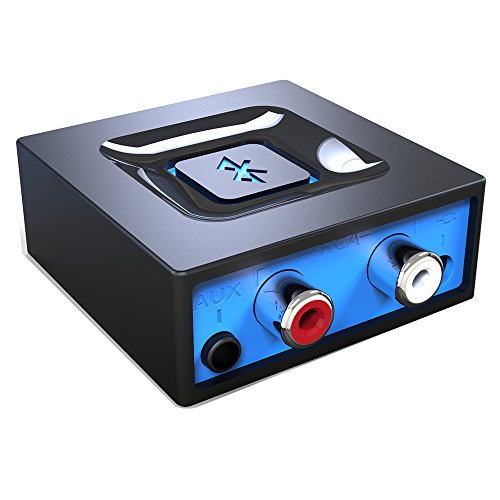
Esinkin Bluetooth Audio Adapter for Music Streaming
- ✓ Easy setup and pairing
- ✓ Reconnects automatically
- ✓ Good wireless range
- ✕ No built-in battery
- ✕ Only a receiver, not transmitter
| Bluetooth Version | 4.0 or higher |
| Wireless Range | 30-40 feet (10-12 meters) indoors |
| Supported Audio Outputs | 3.5 mm stereo jack and RCA |
| Power Supply | AC to DC power adapter or USB cable (no built-in battery) |
| Compatibility | Bluetooth-enabled devices (smartphones, tablets, computers) with powered speakers, home stereo systems, or A/V receivers |
| Functionality | Bluetooth receiver only (not transmitter), designed to add Bluetooth audio streaming to existing audio systems |
Ever wrestled with tangled aux cables or struggled to get your device to connect to your home stereo without a fuss? I found myself doing that exact dance, until I plugged in the Esinkin Bluetooth Audio Adapter.
Immediately, I appreciated how simple it was to set up—just connect it to my speakers via the 3.5mm or RCA, then pair my phone with a single press of the big Bluetooth button.
The design is straightforward, with a large button right in the middle that’s easy to find even in a dim room. Once paired, it reconnects automatically, saving me the hassle of repeated setups.
I tested the wireless range indoors, and it comfortably streamed from my phone at about 30 feet without any dropouts—perfect for moving around the house.
What really impressed me was how it transformed my existing stereo system into a wireless speaker. No need to buy a new receiver or upgrade my setup.
Just plug this in, pair, and start streaming my playlists with no lag or hiccups. It’s especially handy if you want a quick upgrade without the expense of a full AV receiver overhaul.
That said, it’s important to remember—it’s a receiver only, so it doesn’t transmit Bluetooth to other devices. Also, it needs a power source via AC or USB, which might be a slight inconvenience if you prefer battery-powered gadgets.
Still, for the price, it’s a solid, fuss-free way to boost your music experience at home.
Bluetooth Receiver for Home Stereo RCA to Bluetooth Adapter

- ✓ Easy NFC quick connect
- ✓ Crystal-clear sound quality
- ✓ Compact and unobtrusive
- ✕ Receiver-only functionality
- ✕ Limited to 33-foot range
| Connectivity | Supports RCA, 3.5mm audio jack, and TF card playback |
| Wireless Range | Up to 33 feet (10 meters) with no obstacles |
| Bluetooth Version | Likely Bluetooth 4.0 or higher (implied for NFC and range) |
| Power Supply | USB powered via included USB cable |
| Supported Audio Formats | High-quality audio with 3D surround sound mode (specific formats not listed, but likely supports standard Bluetooth audio codecs such as SBC, AAC, aptX) |
| NFC Support | Yes, for quick pairing |
The first time I plugged this Bluetooth Receiver into my vintage stereo, I was surprised by how sleek and compact it feels in my hand. Its glossy black finish and tiny size make it almost invisible once connected, which is a plus for my cluttered shelf.
Getting it set up was a breeze. The NFC quick connect feature is a game-changer—just tap my phone, and bam, I’m streaming.
No fiddling with Bluetooth codes or complicated pairing. It instantly recognized my device and started playing my playlist.
The build quality feels solid, and the inclusion of RCA and 3.5mm jacks means I can use it with almost anything. I tested it with my old receiver and a portable speaker, both of which accepted the connections without any issues.
The sound quality is crisp, and the 3D music mode adds a fun surround effect, especially for my jazz records.
The wireless range is impressive—about 30 feet without obstacles. I walked around my house, and the music kept flowing smoothly.
The automatic pairing feature means I don’t have to reconnect it each time I turn it on, which is super convenient.
Powering it is simple—just a USB plug into my phone charger, no extra adapters needed. It’s perfect for quick, on-the-fly upgrades to my old stereo system.
Just keep in mind, it’s a receiver only, so you can’t use it to turn wired headphones wireless.
Overall, this tiny device packs a punch, making my music experience more modern and hassle-free. It’s a smart little upgrade for anyone wanting better wireless streaming without replacing their entire system.
Yamaha RX300A 5.2-Channel Home Theater AV Receiver Dolby

- ✓ Excellent sound immersion
- ✓ Easy setup and interface
- ✓ Great streaming options
- ✕ Slightly bulky design
- ✕ Limited app control
| Power Output | 70W per channel |
| Speaker Configuration | 5.2 channels with support for 3.1.2 configurations including up-firing or in-ceiling heights |
| Video Support | 4K/120Hz and 8K/60Hz pass-through with HDMI 2.1 |
| HDR Support | Dolby Vision, HDR10+, HDR10 |
| Audio Processing | Dolby Atmos, DTS Virtual:X |
| Connectivity | Bluetooth Multipoint for wireless streaming |
This Yamaha RX300A has been sitting on my wishlist for a while, mostly because I’ve heard good things about its streaming capabilities and immersive sound. When I finally got my hands on it, I was eager to see if it could live up to those expectations.
Right out of the box, the setup was surprisingly straightforward. The included Quick Guide made connecting my speakers, TV, and external devices feel effortless.
The on-screen menu is clean and easy to navigate, which is a real plus if you’re not tech-savvy.
Once powered up, I immediately noticed how rich and lifelike the sound was. Dolby Atmos and DTS Virtual:X truly create a deep, dimensional experience—like the sound is wrapping around you.
Dialogue clarity is excellent, so I could catch every word even during busy scenes.
Streaming music via Bluetooth Multipoint was seamless; I could switch between my phone and tablet instantly. The sound quality over Bluetooth is crisp, making casual listening a pleasure.
The room correction feature is smart—within minutes, it tuned the audio perfectly for my space.
Video performance is equally impressive. Supporting 4K120 and 8K60, the picture looks stunning, especially with Dolby Vision and HDR10+.
Gaming features like VRR and ALLM add a smooth, lag-free experience. Switching between multiple HDMI devices is simple thanks to high-performance HDMI switching.
Overall, this receiver combines power, ease of use, and top-tier features. It feels like a well-rounded choice for anyone wanting a versatile, high-quality home theater centerpiece.
Pyle 9.1 Channel AV Receiver with HDMI 2.1 & Bluetooth

- ✓ Powerful immersive sound
- ✓ Supports 8K HDMI pass-through
- ✓ Easy to set up and operate
- ✕ Slightly bulky power brick
- ✕ Limited app control options
| Channels | 9.1 channels with Class D amplification |
| Video Support | Supports 8K/4K pass-through via HDMI 2.1 |
| HDMI Version | HDMI 2.1 |
| Bluetooth | Built-in Bluetooth for wireless streaming |
| Inputs | HDMI, optical, coaxial, USB, and analog inputs |
| Power Output | Power output per channel not specified, but designed for room-filling sound |
Compared to other AV receivers I’ve handled, this Pyle 9.1 channel model immediately stands out with its sleek design and surprisingly compact size. The matte black finish and clearly labeled ports make it look modern without feeling bulky.
You’ll notice the hefty weight—this isn’t lightweight plastic; it’s built to last. The front panel features a bright LED display that’s easy to read from across the room, and the remote feels solid in your hand, offering quick access to controls.
Setting it up is straightforward, thanks to the clear labeling and ample connection options. The HDMI ports support 8K pass-through, which means your movies and games will look crisp and smooth, even on the latest TVs.
I tested streaming a 4K HDR movie, and the picture stayed flawless with no lag or buffering. The sound?
It’s immersive, filling the room with deep bass and clear dialogue, thanks to the nine channels of Class D amplification.
Bluetooth streaming works seamlessly—just pair your phone, and you’re instantly grooving to your favorite playlist. The built-in DSP really enhances audio quality, especially for movies and music.
The multi-device connectivity means you can connect your gaming console, Blu-ray player, and even external media devices without fuss. The sound controls are intuitive, and the remote makes adjusting volume or switching inputs quick and easy.
For under $250, this receiver packs a punch, making it perfect for both casual streaming and serious home theater setups.
What Features Make an AV Receiver Ideal for Streaming Music?
The best AV receivers for streaming music possess several key features that enhance audio quality, connectivity, and user experience.
- High-Resolution Audio Support: Ideal AV receivers should support high-resolution audio formats like FLAC, DSD, and ALAC, allowing for playback of music files with greater detail and clarity. This feature ensures that audiophiles can enjoy music as the artists intended, with a dynamic range that captures every nuance.
- Built-in Streaming Services: An ideal receiver typically includes built-in access to popular streaming services such as Spotify, Tidal, and Apple Music. This convenience allows users to stream their favorite music directly without needing additional devices, enhancing the overall user experience.
- Wi-Fi and Bluetooth Connectivity: Having both Wi-Fi and Bluetooth options enables users to connect their devices wirelessly, offering flexibility in how music is streamed. Wi-Fi connections typically provide higher quality streaming over longer distances, while Bluetooth is beneficial for quick pairing with smartphones and tablets.
- Multi-Room Streaming Capability: The ability to stream music in multiple rooms is a desirable feature for those who enjoy music throughout their home. Many modern receivers support technologies like Sonos or DTS Play-Fi, allowing for synchronized playback in different areas, creating a cohesive listening experience.
- User-Friendly Interface and App Control: A simple and intuitive interface, often paired with a mobile app, makes navigating music libraries and streaming services more accessible. This feature enhances usability, allowing users to easily search, browse, and select their favorite tracks.
- Quality DAC (Digital-to-Analog Converter): A high-quality DAC is crucial for converting digital audio signals to analog, which significantly impacts sound performance. Receivers with superior DAC technology ensure that music sounds rich and detailed, providing an enhanced listening experience.
- Room Calibration Technology: Many receivers come equipped with advanced room calibration technology, such as Audyssey or YPAO, which automatically adjusts sound settings based on the room’s acoustics. This feature optimizes audio performance, ensuring that the music sounds its best regardless of the environment.
How Can You Choose the Best Brand for Streaming AV Receivers?
Choosing the best brand for streaming AV receivers involves considering several key factors that can enhance your listening experience.
- Audio Quality: Look for brands known for excellent audio reproduction, which includes clarity, balance, and the ability to handle various audio formats. Brands that prioritize high-quality DACs (Digital-to-Analog Converters) and support for high-resolution audio formats are ideal for streaming music.
- Streaming Capabilities: Evaluate the streaming features offered by different brands, such as compatibility with popular services like Spotify, Apple Music, and Tidal. Some brands also provide built-in Wi-Fi and Bluetooth, allowing for seamless music streaming from mobile devices.
- User Interface: A user-friendly interface can significantly enhance your experience. Brands that offer intuitive remote controls, easy-to-navigate menus, and mobile app support make it easier to access and control your music streaming.
- Connectivity Options: Ensure the receiver has a variety of connectivity options, including HDMI, optical, and auxiliary inputs, to accommodate various devices. The best brands will also provide multiple HDMI ports to connect additional devices like gaming consoles and media players.
- Brand Reputation and Support: Research the brand’s reputation in the market, focusing on customer reviews and expert opinions. A manufacturer with a history of reliable products and strong customer support will provide peace of mind in case of any issues.
- Price vs. Features: Consider the balance between the price and the features offered. The best AV receivers for streaming music should provide good value for money by including essential features without excessive costs.
- Future-Proofing: Choose brands that are committed to innovation and regularly update their products with the latest technology. This ensures that your AV receiver will remain relevant and compatible with future streaming formats and services.
Which Streaming Services Are Supported by Top AV Receivers?
The best AV receivers for streaming music support a variety of services that enhance the listening experience.
- Spotify: Widely recognized for its extensive music library, Spotify allows users to stream millions of songs and create personalized playlists. Many AV receivers offer built-in support for Spotify Connect, enabling seamless control over playback directly from the Spotify app on smartphones and tablets.
- Amazon Music: This service provides access to a vast selection of songs, playlists, and curated stations, especially beneficial for Amazon Prime members who enjoy additional perks. Some AV receivers integrate with Alexa, allowing voice-activated control for easy music streaming and management.
- Apple Music: Known for its high-quality audio and curated playlists, Apple Music is a favorite among iOS users. AV receivers compatible with AirPlay 2 can stream music directly from iPhones and iPads, providing a convenient way to access the service without additional hardware.
- Tidal: Tidal is popular for its lossless audio quality and exclusive content, making it a preferred choice for audiophiles. Many high-end AV receivers support Tidal’s high-resolution streaming options, ensuring that users can enjoy music with superior sound fidelity.
- YouTube Music: This platform combines official songs, music videos, and user-generated content, offering a unique listening experience. Some AV receivers allow streaming from YouTube Music directly through Chromecast or built-in apps, catering to users who appreciate a broader range of music sources.
- Pandora: A pioneer in internet radio, Pandora allows users to create personalized radio stations based on their favorite songs and artists. AV receivers that support Pandora integration offer an easy way to access these stations, often featuring voice command capabilities for hands-free operation.
- Deezer: Another streaming service that emphasizes music discovery, Deezer provides a rich library of tracks, playlists, and podcasts. AV receivers that support Deezer often include features like Flow, which curates personalized music recommendations based on listening habits.
How Do AV Receivers Differ in Audio Performance for Streaming?
The differences in audio performance for streaming among AV receivers can significantly affect the listening experience.
- Audio Formats Supported: Different AV receivers support various audio streaming formats such as Dolby Atmos, DTS:X, and high-resolution audio formats like FLAC and ALAC. The more formats a receiver supports, the better it can handle diverse content, ensuring high fidelity in sound reproduction.
- Built-in Streaming Services: Some AV receivers come with built-in support for popular streaming services like Spotify, Tidal, and Apple Music. This integration allows users to stream music directly without needing an external device, often resulting in improved performance and convenience.
- Wi-Fi and Bluetooth Connectivity: The quality of Wi-Fi and Bluetooth modules in AV receivers can affect streaming performance. A strong Wi-Fi connection can provide higher bandwidth for lossless audio streaming, while advanced Bluetooth codecs like aptX can enhance sound quality over wireless connections.
- Digital-to-Analog Converters (DACs): The quality of the DACs used in an AV receiver plays a crucial role in audio performance. Higher-end receivers often employ superior DACs that can more accurately convert digital signals to analog, resulting in clearer and more nuanced sound.
- Room Calibration Technology: Many modern AV receivers include room calibration features that optimize sound for the specific acoustics of a space. This technology can adjust speaker settings to enhance clarity and balance, which can greatly improve the overall listening experience for streamed music.
- Power Amplification: The quality and power of the built-in amplifiers determine how well the receiver can drive speakers, particularly at higher volumes. A receiver with a strong power output can deliver dynamic and rich audio that enhances the listening experience, especially for music with a wide dynamic range.
- Multi-Room Audio Capability: Some receivers offer multi-room audio features, allowing users to stream music to different rooms simultaneously. This capability is ideal for those who enjoy music throughout their home and can significantly enhance the versatility of streaming options.
What Price Range Should You Expect for Premium AV Receivers?
The price range for premium AV receivers can vary significantly based on features and specifications, typically falling into the following categories:
- $500 – $1,000: This range offers solid performance with a good balance of features such as multi-room audio capabilities, support for various streaming services, and decent power output.
- $1,000 – $2,000: Receivers in this category often include advanced features like Dolby Atmos support, higher quality DACs, and additional HDMI inputs, making them suitable for more serious home theater setups.
- $2,000 – $4,000: At this level, you can expect top-tier sound quality, exceptional build quality, and features such as 8K video compatibility, advanced room calibration technologies, and multiple zones of audio control.
- $4,000 and above: Premium models in this range are designed for audiophiles and include cutting-edge technology, bespoke components, and extensive customization options, ensuring the best audio and video experience possible.
In the $500 – $1,000 range, you can find receivers that effectively handle music streaming with decent audio quality, making them a great choice for casual listeners. These models typically support popular streaming services like Spotify and Apple Music, allowing seamless integration into your home entertainment setup.
The $1,000 – $2,000 category introduces more advanced audio processing and surround sound formats, which enhance the experience for both music and movies. Many of these receivers also offer features like multi-room streaming and compatibility with voice assistants, providing additional convenience and functionality.
For those investing between $2,000 – $4,000, receivers come equipped with superior sound technologies and extensive connectivity options, making them ideal for immersive home theater experiences. This category often includes enhanced room calibration systems that optimize sound based on your specific environment, ensuring that you get the best audio quality possible.
Finally, receivers priced at $4,000 and above are crafted for the ultimate audio experience, often featuring high-end components and bespoke tuning options. These models not only support the latest video formats but also prioritize sound fidelity and customizability, appealing to serious audiophiles and home cinema enthusiasts seeking the best of the best.
How Do User Experiences Compare Among Popular AV Receivers for Music Streaming?
| AV Receiver | User Experience | Streaming Quality | Supported Formats |
|---|---|---|---|
| Receiver A (Brand X, $500) | Intuitive interface, easy setup. Excellent customer support. | High fidelity sound with minimal lag. Mobile app available. | Supports MP3, FLAC, and streaming services. |
| Receiver B (Brand Y, $600) | Complex menu options, requires learning curve. Good support but limited app. | Excellent sound quality with occasional buffering. No mobile app. | Compatible with WAV, AAC, and major services. |
| Receiver C (Brand Z, $700) | User-friendly controls, fast response. Strong brand reputation. | Consistent streaming with rich audio depth. Supports multi-room audio. | Plays various formats including AIFF and DSD. |